Stronger. Smarter. Faster.
Engineered for what’s next
Roller-Compacted Concrete (RCC) pairs the muscle of conventional concrete with the installation speed of asphalt, creating pavements that open to traffic in a day yet last decades with minimal upkeep.
What Makes RCC Different?
RCC is placed with high-density asphalt pavers and immediately compacted by vibratory rollers, eliminating forms, dowels, and lengthy cure delays.
A zero-slump mix locks coarse aggregates together, producing a dense, rigid slab that resists rutting, shoving, and fuel spills even under repetitive heavy loads.
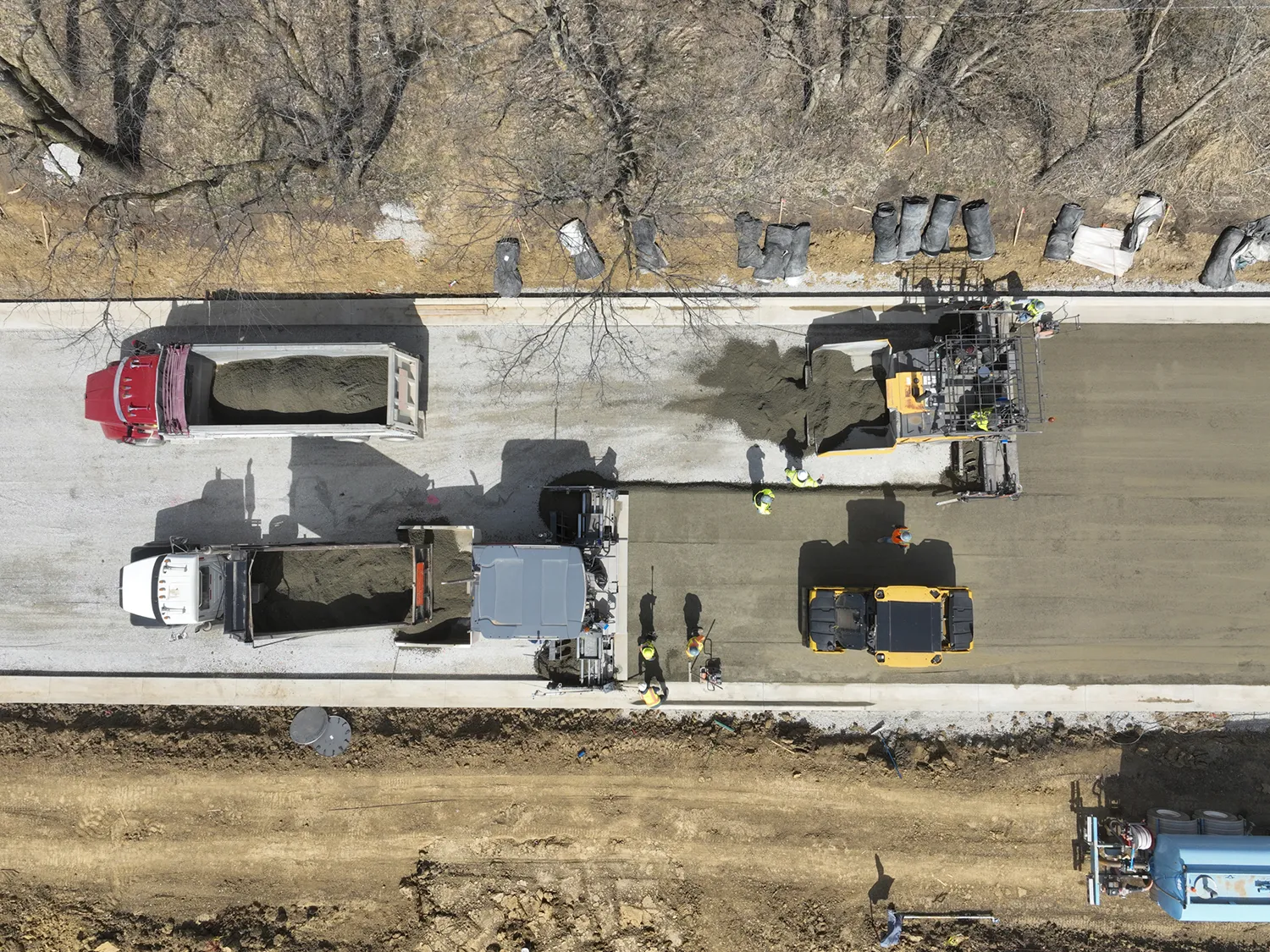
benefits of RCC
Strength & Durability
RCC commonly exceeds 50 MPa (7,250 psi) compressive strength at 28 days, outperforming many conventional mixes.
Dense, joint-free surfaces shrug off rutting and thermal cracking for 20+ years.
Speed & Productivity
Projects often reopen to light traffic within 24 hours of placement, slashing closure times.
No steel, forms, or finishing translates to rapid, repeatable production rates.
Cost & Sustainability
Fast placement, lean crews, and negligible maintenance deliver 25–30 % life-cycle savings over traditional concrete.
RCC’s dry, zero-slump mix needs up to 40% less water than conventional concrete, conserving valuable resources.

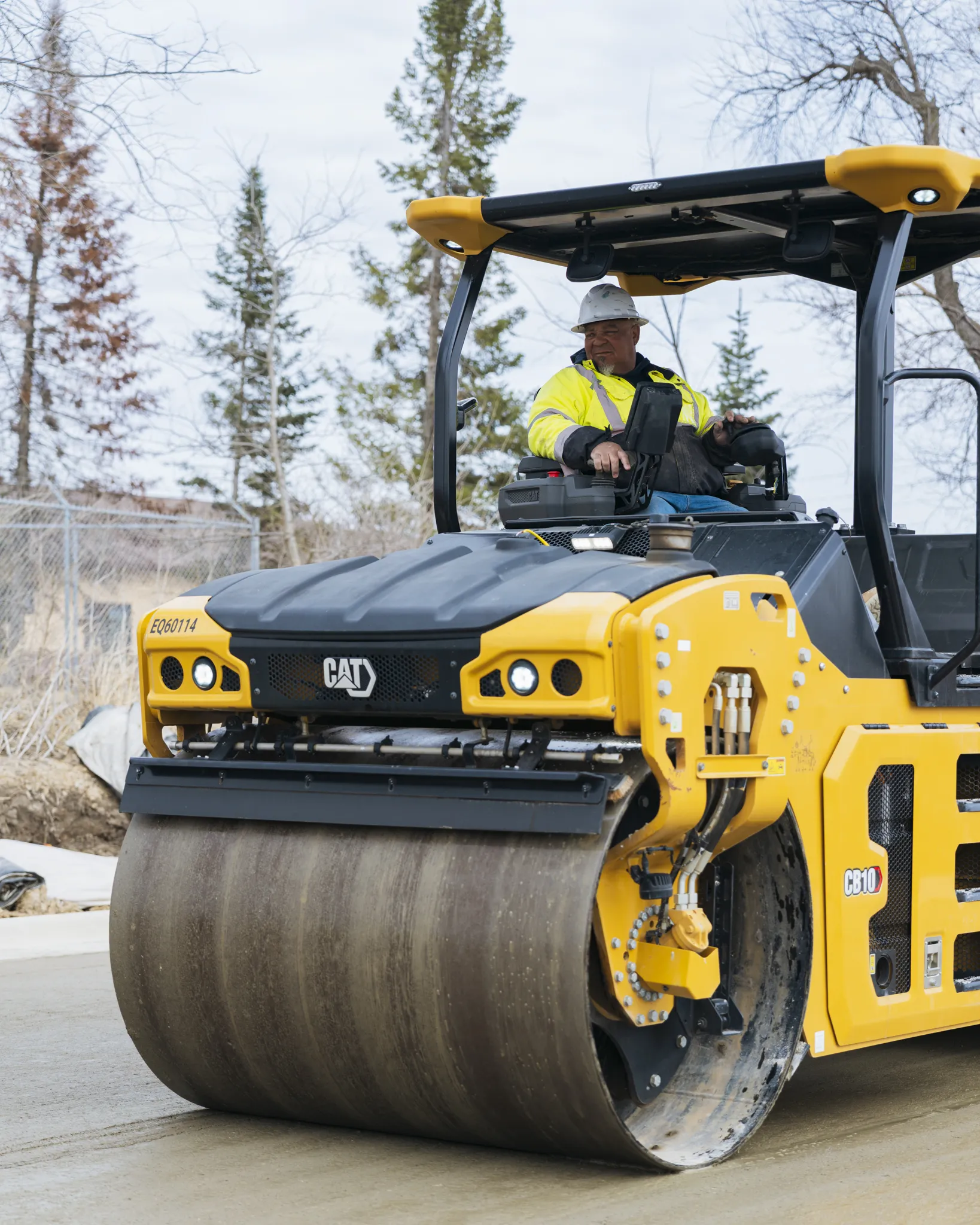
Paving Smarter
Material Science in Motion
Aggregates, sand, and cement paste interlocking like precision gears. That’s RCC’s zero-slump matrix at work—compacted until virtually air-free, then cured to high strength. Real-time mix design tuning lets us balance water demand, fly-ash content, and particle grading to hit strength targets while minimizing shrinkage and heat of hydration.
High reflectivity cuts site-lighting energy, and lighter pavement temperatures help mitigate urban heat-island effects.
Equipment & Methods
Our crews deploy high-density asphalt pavers calibrated for zero-slump mixes, followed by dual-frequency vibratory rollers that deliver uniform density from edge to edge. Saw-cutting or early-entry joints, if needed, are guided by GNSS control for perfect spacing. Field techs log moisture, density, and in-place strength with cloud-connected sensors, giving owners instant QA/QC transparency.
